



By Sebi Bumann, Founder HAE · Updated in November 2026
Merino is one of those materials that is talked about quite a lot in the outdoor sector. Temperature-regulating, soft, odor-resistant, natural – the list of benefits is long.
We at HAE have been working with merino wool for many years. For beanies, headbands, neckwarmers, and also for our own yarn for crocheting.
Nevertheless, we find: Merino is not automatically the best solution for every product and every use.
Sometimes we opt for 100% merino wool. Sometimes we deliberately combine it with polyamide, recycled PET, or other fibers. What matters to us is not what sounds best on the label, but what the finished product is intended to do.
Merino wool explained in brief: The most important at a glance
| Property | What does that mean in practice? |
|---|---|
| Temperature-regulating | Merino helps to balance temperature differences and is therefore well suited for changing conditions. |
| Moisture management | The fiber can absorb moisture vapor and later release it again. |
| Odor-resistant | Merino wool usually absorbs body odor less quickly than many synthetic materials. |
| Soft feel | Fine merino fibers can be worn comfortably directly on the skin. |
| Natural fiber | Merino wool is a renewable raw material and can be biodegraded under suitable conditions. |
| Particularly suitable for | Everyday life, mountain sports, skiing, snowboarding, travel, and days with changing temperatures. |
| Not automatically ideal for | Every high-intensity activity – depending on the use, material blends or technical fibers may make more sense. |
In short: Merino wool is particularly well suited when activity and temperature change throughout the day. It can balance warmth and moisture, feels comfortable on the skin, and develops unpleasant odors relatively slowly. For very intense activities or when particularly high shape stability is required, we at HAE deliberately combine merino with other fibers in some cases.
What is merino wool?
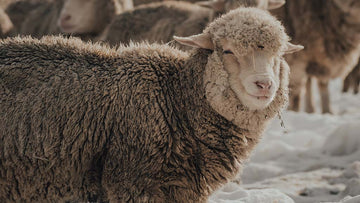
Merino wool comes from the merino sheep and belongs to the particularly fine wool qualities. It is precisely these fine fibers that make it interesting for clothing worn directly on the skin.
In the outdoor sector, merino is used mainly for base layers, socks, hats, headbands, and neckwarmers. In other words, everywhere where temperature, moisture, and wearing comfort play an important role.
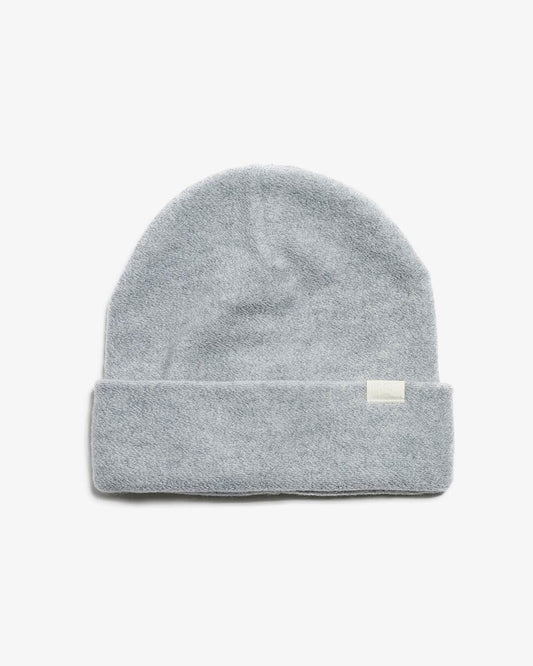
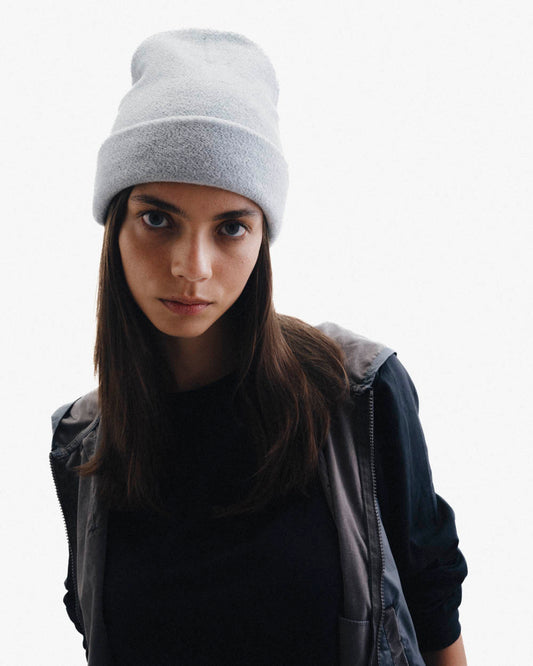
That is why at HAE you have found merino in different forms for many years: from the classic Purist hat made of 100% merino to our Drifter Merino Neckwarmer and products in which we deliberately combine merino with other fibers.
You can find an overview of our current products in the HAE Merino Collection.

Did you know? We produce our HAE wool ourselves in Northern Italy - and it consists of 50% merino wool.
What makes merino wool so special?
Merino wool is often described as an all-rounder.
We wouldn't put it quite that simply. But the combination of various natural properties does make the fiber quite versatile.
- Temperature regulation: Merino helps maintain a comfortable microclimate around the body.
- Moisture management: The fiber can absorb moisture vapor and later release it to the environment again.
- Odor-resistant: Odor molecules can be bound in the fiber, which often allows merino to stay fresh longer.
- Soft: Fine merino fibers can snuggle comfortably against the skin.
- Elastic: Wool fibers naturally possess a certain elasticity and can return to their shape after stress.
- Renewable raw material: Wool grows back on the sheep again and again.
“What I like about merino is not simply that it keeps you warm. It gets interesting for me when conditions change. Cold in the morning, exercise later, then a break again or wind. It is exactly on such days that merino simply feels very comfortable.”
Why merino works in changing temperatures
A typical day in the mountains rarely consists of a constant temperature.
It is cold at the start. It gets warm during the ascent. Wind is added on the ridge. You cool down again during the break.
This is exactly where merino wool plays out one of its greatest strengths.
The natural structure of the wool fiber can trap air and thus insulate. At the same time, the fiber reacts to moisture and temperature changes. This helps merino to balance strong fluctuations more comfortably.
But it is important: Merino does not automatically make a product very warm.
How warm a hat or headband actually is depends just as much on the thickness of the yarn, the knitting style, the number of layers, and the construction.
A good example is our Gazer Merino Beanie. It contains 77% merino wool, but is single-layered and deliberately designed to be light. That is why it is particularly well suited for autumn, spring, and milder temperatures.
So the material specification alone does not yet say how warm a product is.
Moisture and odor: What merino can really do
One of the properties of merino wool that we particularly appreciate on longer days outdoors is its handling of moisture.
The fiber can absorb moisture vapor in its inner structure and later release it again. This means that merino can still feel comfortable even when activity and temperature change.
But this does not mean that merino simply makes liquid sweat disappear.
Under very high physical exertion, technical synthetic fibers or targeted material blends can have advantages. That is exactly why at HAE we do not exclusively rely on 100% merino depending on the product.
Does merino really not stink?
Of course, merino is not completely odorless.
But the wool fiber can absorb moisture and odor molecules in its structure. This means that merino clothing often develops unpleasant odors more slowly than many synthetic materials.
This is particularly pleasant when you use a product for several days, are traveling, or do not want to wash it immediately after every use.
Does merino wool itch?
Those who immediately think of an itchy sweater from childhood when they think of wool are not alone.
But merino wool differs significantly from coarser wool qualities. The fibers are particularly fine and can therefore bend more easily, instead of pressing stiffly against the skin.
This generally ensures the soft feel that merino is known for.
Nevertheless, skin sensation is individual. What feels extremely soft to one person may be perceived differently on very sensitive skin.
Processing, yarn, and material blend also influence the feel.
100% merino or material blend – which is better?
The short answer is: It depends on what the product is intended to do.
We use both pure merino wool and various blends at HAE. Not because one is better and the other worse, but because we can achieve different properties with them.
| Material | What we like about it | Example at HAE |
|---|---|---|
| 100% merino | Natural feel, temperature regulation, little odor formation | Purist Beanie, Drifter Neckwarmer, Merino Thin Headband |
| Merino + polyamide | Merino properties combined with additional shape stability and robustness | Cloudline Merino Beanie |
| Merino + polyamide + elastane | Soft merino with additional elasticity and a good fit | Gazer Merino Beanie |
| Merino + recycled PET | Merino comfort combined with a shape-stable synthetic component | Drifter Merino & PET Beanie |
“We do not try to pack as much merino as possible into everything. For a Purist or the Drifter, 100% merino makes absolute sense for us. For other products, we want more elasticity or shape stability. Then a blend is sometimes simply the better solution.”

What merino products does HAE offer?
Over the years, merino has become a permanent part of our collection. We deliberately use the fiber for different areas of application.
Purist – 100% merino for everyday life and cooler days
The Purist hat is probably our most classic merino beanie.
It consists of 100% fine merino wool, is produced in Europe, and is at warmth level 2. For us, it is an uncomplicated companion for everyday life, the city, travel, and cooler days outdoors.
Drifter Merino – our neckwarmer classic
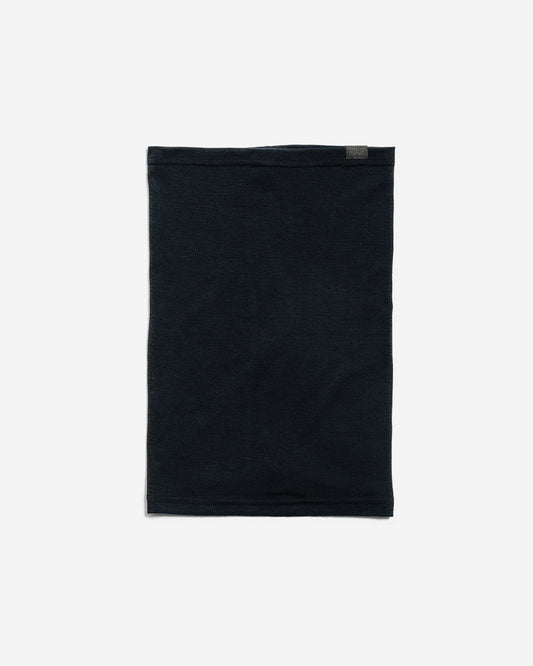
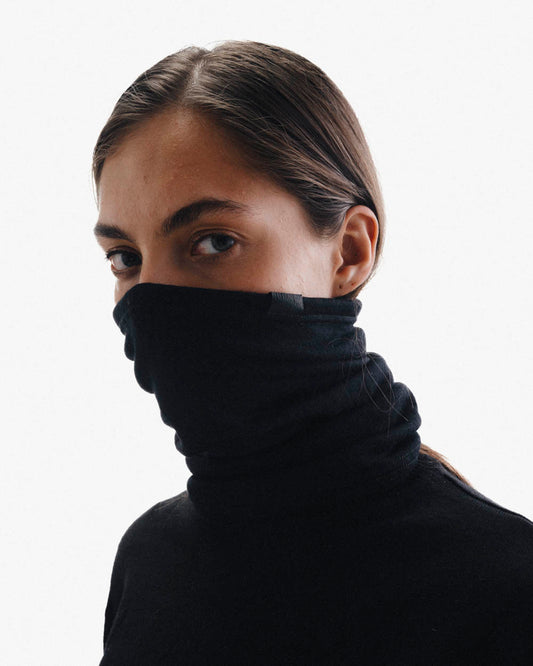
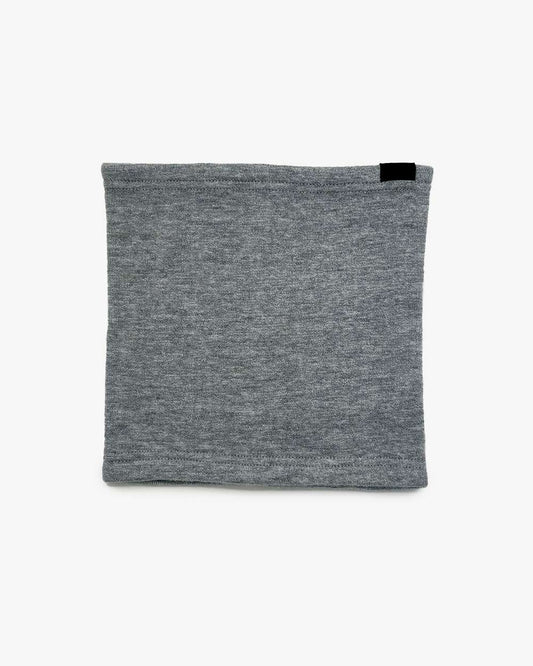
The Drifter Merino Neckwarmer also consists of 100% merino wool.
It has accompanied HAE for many years and is our best-selling neckwarmer. Especially for long days outdoors, many customers like the soft material and the temperature-regulating properties of the wool.
Gazer – light merino for the transitional season
The Gazer Merino Beanie shows well that merino is not only intended for the deepest winter.
The single-layer construction and the mix of 77% merino wool, 22% polyamide, and 1% elastane make the hat light, soft, and elastic. With warmth level 1 to 2, it is particularly interesting for autumn, spring, and milder days.
Cloudline – merino with a little more stability
For the Cloudline Merino Beanie, we combine 92% merino wool with 8% polyamide.
This way, the typical properties of merino are preserved, while the synthetic component brings additional stability to the yarn.
Drifter Merino & PET – two material worlds combined
Our Drifter hat consists of 50% merino wool and 50% recycled PET.
Here we deliberately combine the natural properties of the wool with a shape-stable synthetic component.
You can find all current models together in our Merino Collection.
When I myself wear merino
Technical properties are one thing. In the end, you notice pretty quickly when you yourself like to reach for which material.
“I like merino especially on days when I do not know exactly how the weather will develop. You start cold, move around, take a break somewhere, and later maybe you are in the wind again. For such changing conditions, I find merino extremely comfortable.”
I particularly like to reach for merino when I wear a product for a longer period. In everyday life, on a longer day outdoors, or while traveling.
If, on the other hand, it is about very intense exercise and I know that I will sweat a lot, I look at other materials or blends just as much.
For me, therefore, the question is not: “Is merino the best material?”
But rather: “Is merino the right material for this day and this use?”
How do I properly care for and wash merino?
One of the advantages of merino is that you often do not need to wash it immediately.
After a normal day, it is often enough to air out the product well. This protects the material and reduces unnecessary washing cycles.
Our most important care instructions
- Air out first: Not every use automatically means that your merino product has to go into the washing machine.
- Observe the care label: The exact material blend and processing determine how your product may be washed.
- Wash gently: If the care label allows it, use hand washing or a wool wash program at a maximum of 30 °C.
- Use wool detergent: A suitable mild detergent protects the wool fiber.
- No fabric softener: This is not necessary for wool fibers.
- Do not wring out strongly: Carefully press out the product.
- Dry flat: This way the product keeps its shape better.
Important: The care label in the respective HAE product always takes precedence. Especially with material blends, the care requirements can differ.
Is merino wool sustainable?
We prefer to answer this question a little more nuanced.
Merino wool is a natural and renewable fiber. Pure wool can be biologically degraded by microorganisms in soil and water under suitable conditions.
These are clear advantages of a natural fiber.
Nevertheless, “natural” does not automatically mean “sustainable”.
Animal husbandry, origin, processing, dyeing, transport, durability, and in the end also the question of how long a product is actually worn belong to our consideration just as much.
That is why at HAE we do not try to sell a product as sustainable solely because of merino.
It is more important to us to use materials sensibly and to develop products that work and are worn for as long as possible.
The majority of our collection is manufactured together with long-term partners in Europe. You can learn more about this on our page about HAE Production.
Frequently asked questions about merino wool
What is merino wool?
Merino wool is a particularly fine wool quality from the merino sheep. The fine fibers make it soft and comfortable for products worn directly on the skin. At the same time, the wool can regulate temperature and moisture.
Is merino wool warm?
Merino wool has good insulating and temperature-regulating properties. How warm a concrete product is, however, depends just as much on yarn thickness, knitting style, material weight, and number of layers. A thin merino headband can therefore be significantly less warm than a thickly knitted merino beanie.
Is merino wool also suitable for autumn?
Yes. Especially with changing temperatures, merino can be very comfortable. Light constructions like a thin headband or a single-layer beanie are well suited for autumn and the transitional season. Not only the material is decisive, but also the thickness of the product.
Does merino wool itch?
Merino fibers are finer than many classic wool fibers and are therefore usually perceived as significantly softer. However, personal skin feel is individual, and the quality and processing of the yarn also play a role.
Why does merino smell less quickly?
The structure of the wool fiber can absorb moisture and odor molecules. As a result, merino wool often develops unpleasant odors more slowly than many synthetic fibers. However, even merino does not remain completely odorless.
How often do I need to wash merino?
Not after every wear. For light use, it is often enough to air out the product well. You should wash it if it actually gets dirty or no longer smells fresh. Always pay attention to the care label of the respective product.
At what temperature can I wash merino?
If the care label allows it, a wool wash program or gentle hand washing at a maximum of 30 °C is suitable for many merino products. However, the exact care depends on the material mix and processing.
What is better: 100% merino or a merino blend?
Both can make sense. 100% merino offers the natural properties of the wool fiber in pure form. Blends with polyamide, elastane, or recycled PET can bring additional elasticity, stability, or durability. Which variant is better depends on the respective product and use.
Is merino better than polyester?
Not necessarily. Merino scores points for temperature regulation, wearing comfort, and low odor development. Technical polyester fibers, on the other hand, can dry particularly quickly depending on the construction and be very functional under intense stress. That is why we use both materials at HAE and partially combine them.
Is merino wool sustainable?
Merino wool is a natural and renewable raw material, and pure wool fibers can be biodegradable under suitable conditions. However, the ecological impact of a finished product also depends on animal husbandry, production, processing, transport, durability, and use. Therefore, merino is not automatically synonymous with sustainable.
Which HAE products are made of merino wool?
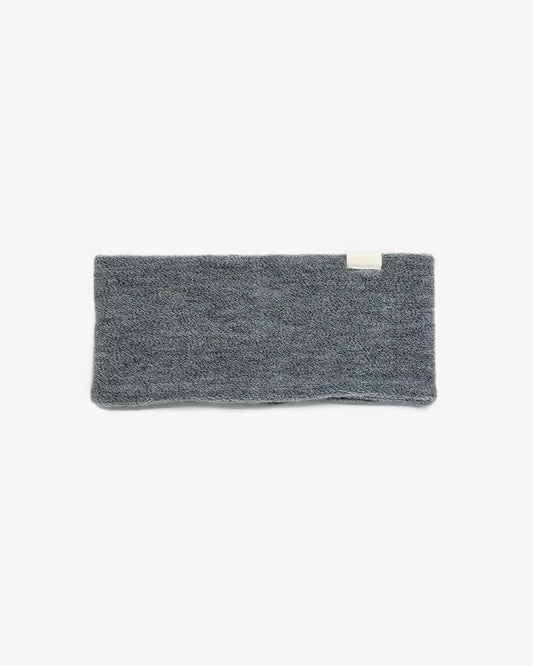
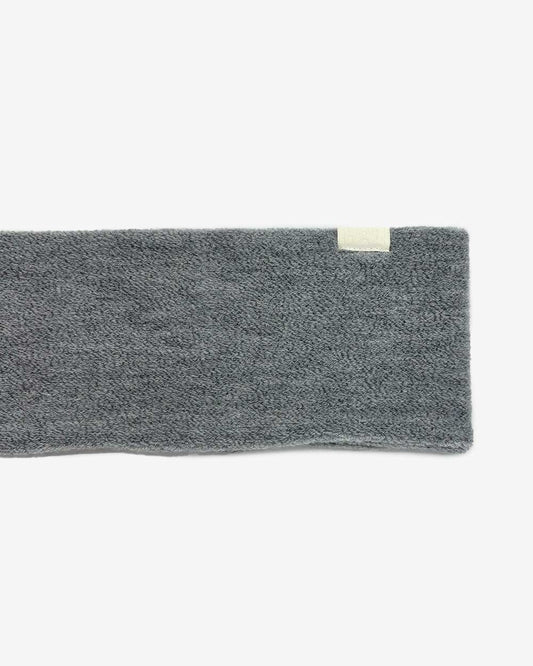
HAE uses merino for beanies, headbands, and neckwarmers, among others. This includes, for example, the Purist beanie and the Drifter neckwarmer made of 100% merino, as well as models like Cloudline, Gazer, or Drifter Merino & PET with different material blends. You can find all current products in our Merino Collection.
Why merino will stay at HAE
In twenty years at HAE, we have tried out quite a few materials.
Some were perfect for a specific purpose. Others eventually disappeared again.
Merino stayed.
Not because it is the best solution for everything.
But because the fiber works for many of the days we make our products for: cold mornings, movement, breaks, wind, city, mountains, and long days outdoors.
“In the end, we don’t want to tell a material story just because it sounds good. A product has to work. Merino has proven itself for us over many years – and that is why it will continue to be an important part of HAE.”
THE BEST DAYS ARE HANDMADE.
Sources on merino wool
For the general material properties, in addition to our own experience with merino, we have considered information from The Woolmark Company and the International Wool Textile Organisation, among others.