



By Sebi Bumann, HAE Founder · Updated in November 2026
If there is one material that could hardly be closer to HAE, it is the wool of the Valais Blacknose sheep.
The Blacknose sheep belongs to Upper Valais like the mountains themselves. It is adapted to life in the mountains, unmistakably marked by its black markings, and has a thick, robust wool that at first glance doesn't really look like classic clothing wool.
That is exactly what makes it interesting to us.
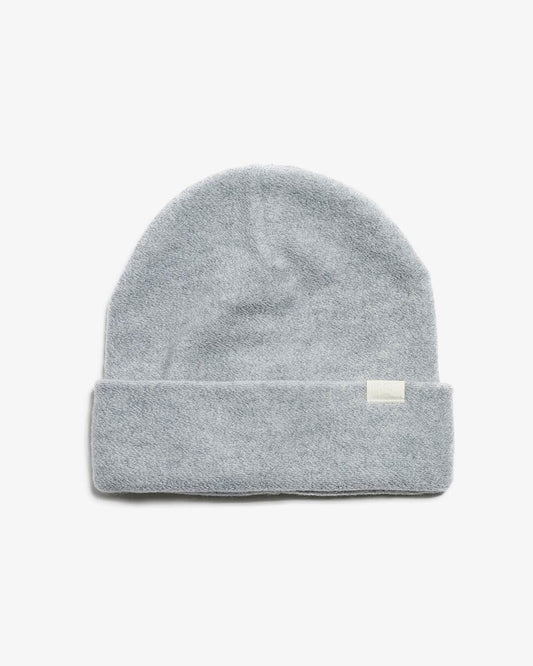
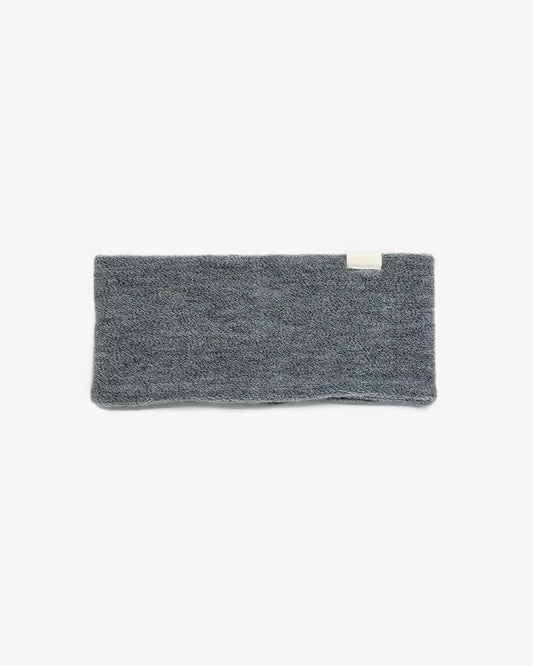
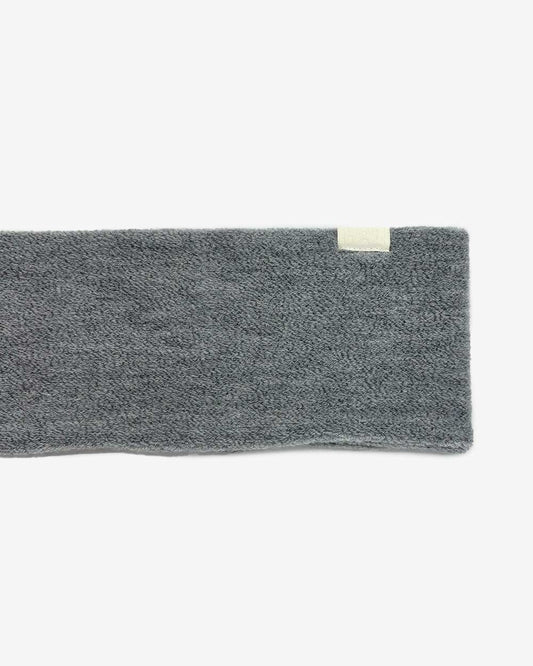
Because our The Local Beanie and the The Local Headband are made of 100% wool from the Valais Blacknose sheep. Inside, a soft polar fleece lining ensures that the coarse natural wool does not rest directly on the skin.
The result is not the finest possible merino product.
It is something else: a robust winter product made from wool that comes directly from our region and has a rather distinctive character.
Valais Blacknose Wool: The Essentials at a Glance
| Feature | What does that mean? |
|---|---|
| Origin | Wool from the Valais Blacknose sheep from Valais |
| Wool quality | Coarse, long-fibered, and robust |
| Directly on the skin? | The wool is relatively rough; therefore, our beanie and headband have a soft polar fleece lining. |
| HAE Products | The Local Beanie, The Local Headband, and Chlunschi Blacknose Sheep |
| Warmth level | Level 3 – for very cold to icy days |
| Suitable for | Winter everyday wear, skiing, snowboarding, cold days outdoors, and alpine activities |
| Processing of the wool | Valais raw wool, yarn processing in Switzerland |
| Special feature | A regional raw material that is normally rarely used for clothing |
In short: The wool of the Valais Blacknose sheep is significantly coarser than merino or alpaca. That is exactly why we combine it with a soft fleece lining in our The Local products. This preserves the robust character of the regional wool while allowing the beanie or headband to be worn comfortably against the skin.

Beanie made from locally sourced Valais Blacknose sheep wool
The Valais Blacknose Sheep – A True Local
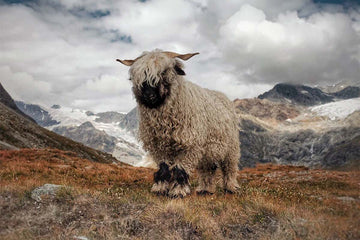
The Valais Blacknose sheep is an old mountain breed and calls Upper Valais home.
Anyone who lives in Valais or is regularly out and about here probably knows the animals: white coat, black nose, black markings around the eyes, ears, and legs, as well as characteristic spiral horns.
The animals are adapted to the conditions in the mountains and are also kept in steep, high-alpine areas.
And of course, their wool plays an important role in this.
“We don’t have to look far for this story. The Blacknose sheep belongs to Valais, and we belong to Valais. That is why it has always been exciting for me to see whether we could make a product from this local wool that truly suits HAE.”
What Is Valais Blacknose Sheep Wool Like?
Anyone who holds Blacknose sheep wool in their hands for the first time will notice pretty quickly: This is not merino.
The wool is coarse, long-fibered, and robust. It also contains coarser guard hairs in some cases.
These are exactly the properties that suit the wool’s original use. It is very well suited for robust applications such as felt products, seat cushions, rugs, or insulation materials.
For a product that rests directly on the forehead or head, however, the coarse fiber presents a challenge.
And that is exactly where it becomes interesting for us.
Does Blacknose Wool Itch?
Compared to fine wool qualities such as merino, Blacknose wool is significantly rougher.
We would therefore not describe an unlined beanie made from this wool as particularly soft against the skin.
For our products, we deliberately solve this with a soft polar fleece lining.
This preserves the original character of the Blacknose wool on the outside, while a pleasant material rests directly on the head and ears on the inside.
Why We Still Use This Wool for Headwear
If we had simply looked for the softest wool possible, we probably wouldn’t have ended up with the Valais Blacknose sheep.
There is merino, alpaca, or other fine yarn qualities for that.
This project was about something else.
We wanted to know whether a raw material from our immediate surroundings could be further developed so that a really good winter product could be made from it.
Blacknose wool has properties that make it exciting for this:
- It is robust and resilient.
- The thick wool structure offers good insulation.
- It has a very distinctive, natural look.
- It comes directly from our home region.
- It is a renewable raw material.
At the same time, we do not hide its weakness: It is relatively rough.
That is why the product only works for us by combining the regional natural wool on the outside with the soft fleece on the inside.
From 30 Hand-Crocheted Headbands to Our Own Production
We had our first experiences with Blacknose wool with a very small series. For these first products, we found the required wool with the Julen family in Zermatt. This resulted in 30 hand-crocheted headbands. They were gone within 24 hours.
We really hadn’t expected that.
At the same time, the next questions quickly followed: When will there be more? Do you also have a beanie? Can you produce more of them? And that is exactly when a small handmade project suddenly became a rather involved material project.
“The first series was actually typical HAE: We had an idea, found the wool, made 30 headbands, and saw what would happen. The fact that they were gone within a day showed us that we weren’t the only ones who found the story behind this material exciting.”
From Valais Sheep to Finished Yarn
Having a local wool does not mean that it automatically becomes finished yarn for a beanie. That was probably one of the most important insights from this project.
Blacknose wool is normally rarely processed into knitting yarn for clothing. Accordingly, we first had to find partners who were willing to work with this coarse quality.
Today, the journey of our Blacknose Chlunschi begins with raw wool from Valais. The wool is further processed in Switzerland and, among other places, spun into yarn or cones in Graubünden.
The individual Chlunschi Blacknose Sheep are then finished by us in Visp. For the finished The Local products, they are then processed into a beanie or headband by our European production partners. That sounds more complicated than buying normal yarn.
It is. But these are exactly the projects that make HAE what it is for us.
The Local: Beanie and Headband Made from 100% Blacknose Wool
This project resulted in our two The Local products:
Both are made from 100% wool from the Valais Blacknose sheep on the outside and have a polar fleece lining on the inside.
With Warmth Level 3, they belong to our warm products for very cold to icy conditions.
The coarse wool structure gives both products their distinctive look. The fleece provides comfort where the product rests directly on the skin.
For What Kind of Days Are The Local Beanie and Headband Suitable?
For us, these are clear winter products.
- Cold to icy winter days
- Skiing and snowboarding
- Winter walks
- Winter everyday wear and city life
- Anyone who is deliberately looking for a product made from regional Valais wool
For an intense ascent or as a thin beanie under a helmet, we would choose a lighter technical product instead.
Chlunschi Blacknose Sheep – The Wool for Your Own Project
We didn’t want to use the wool only for our finished products. That is why it is also available as Chlunschi Blacknose Sheep .
A skein contains 50 grams of wool and is suitable for knitting, crocheting, or other textile projects.
This is also important here: The wool is deliberately left in its natural state and is relatively coarse.
If you make a beanie, headband, or neckwarmer from it, we therefore also recommend a soft lining for direct skin contact.
The robust structure is particularly exciting for other applications. For example, one customer uses our Blacknose wool on a loom to make a table runner.
This actually beautifully shows that this wool can do more than just make beanies.
What Blacknose Products Mean to Me
At HAE, we work with many different materials today. Merino, alpaca, Polycolon®, fleece, cotton, and a wide variety of blends.
Purely technically speaking, there is a fiber that is easier to process than Blacknose wool for almost every application.
Nevertheless, this project is one of the most special for me.
“We live in Valais, develop our products here, and spend a large part of our time in these mountains. When we then take wool from exactly this region and can develop a functional product from it, that already has a different meaning for me than simply choosing a yarn from a catalog.”
This does not mean that a local material is automatically better. Blacknose wool is rough. The processing is involved. And such a product is more difficult to produce than many of our normal beanies.
That is exactly why I find it exciting.
“With The Local, you can see pretty clearly how we like to develop products. Not trying to hide the characteristics of a material, but finding a solution for them. The wool can stay coarse and original on the outside. On the inside, the fleece ensures that the beanie is still comfortable to wear.”
How Do I Care for Blacknose Wool?
Wool products do not need to be washed after every wear. Often, it is enough to air out the beanie or headband well after use and let it dry completely.
Our Most Important Care Instructions
- Air out first: Only wash the product if it is really necessary.
- Follow the care label: The Local product consists of natural wool and a synthetic lining.
- Wash gently: Use a suitable wool detergent and low temperatures if necessary.
- Do not rub or wring hard: Mechanical stress can change the shape and wool structure.
- Dry flat: This helps the product retain its shape better.
- Do not use a dryer: Strong heat and movement are unsuitable for wool products.
The care label of the respective product always takes precedence.
Frequently Asked Questions About Valais Blacknose Sheep Wool
What Is a Valais Blacknose Sheep?
The Valais Blacknose sheep is a mountain breed native to Upper Valais. Typical features are the white coat, the black markings on the nose, eyes, ears, and legs, as well as the spiral horns. The breed has been closely connected to Upper Valais and alpine agriculture for centuries.
What Does Blacknose Sheep Wool Feel Like?
Blacknose wool is coarse, long-fibered, and significantly rougher than fine wool qualities such as merino or alpaca. That is exactly why it is traditionally used more often for robust textile applications than for clothing worn directly against the skin.
Does Valais Blacknose Sheep Wool Itch?
Due to its coarse fibers, the wool can be perceived as itchy when worn directly against sensitive skin. That is why our The Local Beanie and The Local Headband have a soft polar fleece lining, so the coarse wool does not rest directly on the head and ears.
Is Blacknose Wool Warm?
The thick wool structure has good insulating properties. However, how warm a finished product actually is also depends on the knit, thickness, construction, and lining. The Local Beanie and Headband are classified by HAE as Warmth Level 3 and are therefore intended for very cold to icy temperatures.
What Is the Difference Between Blacknose Wool and Merino?
Merino wool has very fine fibers and is therefore well suited for products worn directly against the skin. Blacknose wool is significantly coarser and more robust. At HAE, we use merino for various beanies, headbands, and neckwarmers, while we specifically use Blacknose wool for The Local and combine it with a soft lining.
Where Does the Wool for HAE Blacknose Products Come From?
The raw wool comes from Valais Blacknose sheep. It is further processed in Switzerland. For our Blacknose Chlunschi, the yarn is processed in Graubünden, among other places, and then finished by us in Visp into individual skeins.
Which HAE Products Are Made from Blacknose Wool?
Our Blacknose collection includes the The Local Beanie, the The Local Headband, and the Chlunschi Blacknose Sheep. You can find an overview in our Blacknose Sheep Collection.
Can I Use Blacknose Wool for Crocheting or Knitting?
Yes. Our Chlunschi Blacknose Sheep is available as yarn for crocheting, knitting, and other textile projects. Due to the coarse fiber, we recommend a soft lining for products with direct skin contact.
Is Wool from the Valais Blacknose Sheep Sustainable?
The wool is a natural and renewable raw material from the region. That alone does not automatically make a finished product sustainable. For a comprehensive assessment, factors such as animal husbandry, processing, transport, other materials used, and the lifespan of the finished product play a role.
Why Does HAE Use Such Coarse Wool for Beanies at All?
It is precisely the combination of regional origin, robust fiber, and its distinctive character that makes Blacknose wool interesting to us. With the soft fleece lining, we can preserve its original structure on the outside while still making a comfortably wearable winter product from it.
A Piece of Valais You Can Wear
Not every good material has to be as soft, as technical, or as easy to work with as possible.
Sometimes, the exact opposite is what makes it interesting.
The wool of the Valais Blacknose sheep is coarse, robust, and a little stubborn.
And perhaps that is precisely why it suits its origins so well.
We have learned to work with these qualities instead of hiding them.
From the sheep in Valais to the processing of the wool and the finished beanie, The Local therefore contains much more than just a material.
It contains a piece of our home.
“At HAE, we talk a lot about alpine culture. With Blacknose wool, we don’t really have to explain it at all. The material comes straight from here. For me, there’s almost no way to put more Valais into a hat.”
THE BEST DAYS ARE HANDMADE.