





The skis and snowboards are coming out of the basement again. The bindings are checked, the jacket is waterproofed, and eventually, a fairly simple question arises: What am I actually wearing under my helmet?
Especially when skiing, snowboarding, or going on a ski tour, the answer is not quite so simple. A classic winter hat is often too thick under the helmet. Movement creates moisture. At the same time, you don't want to freeze in the morning, in the wind, or on the descent.
This is exactly why we at HAE have been working with Polycolon® for many years.
Schoeller's functional fiber is extremely lightweight, absorbs no moisture itself, and transports sweat to the outside. For us, this makes it particularly useful where you are moving, sweating, and want to carry as little additional material as possible.
Polycolon® explained briefly: The most important at a glance
| Property | What does that mean in practice? |
|---|---|
| Material base | Polycolon® is a functional yarn based on polypropylene. |
| Moisture | The fiber absorbs no moisture itself, but transports it to the outside. |
| Drying | Since Polycolon® absorbs no water, the material dries very quickly. |
| Weight | Polycolon® is extremely lightweight and is therefore particularly suitable for thin technical products. |
| On the skin | According to the manufacturer, the material also sticks less to the skin when wet. |
| Typical areas of use | Skiing, snowboarding, ski touring, splitboarding, cross-country skiing, mountaineering, and other intensive activities. |
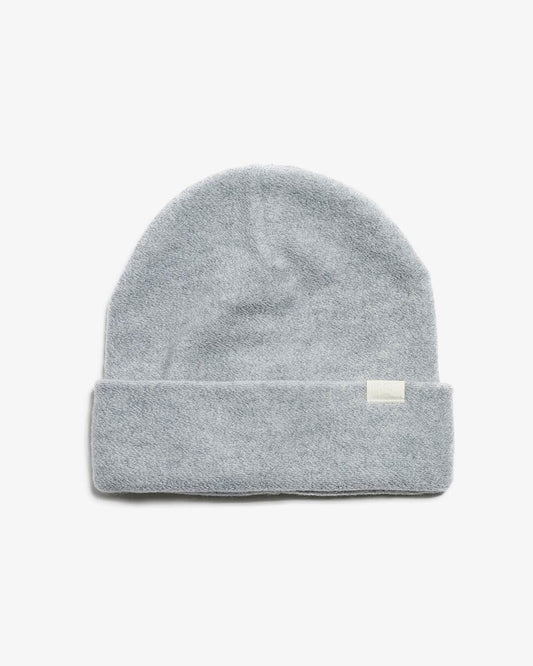
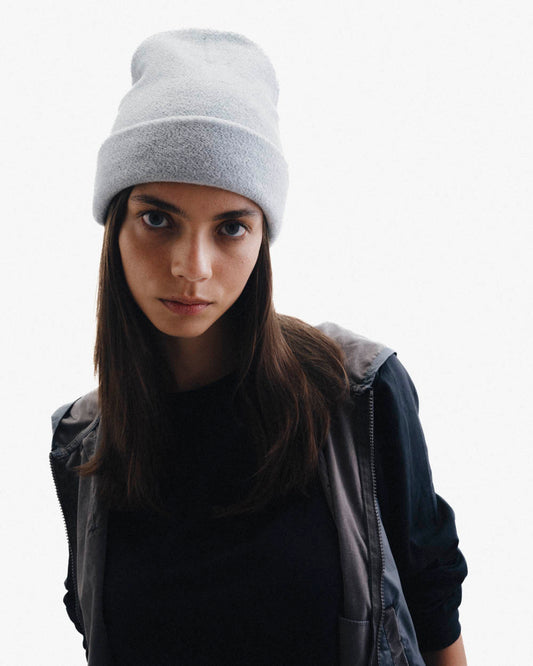
| Under the helmet | Particularly interesting for thin, close-fitting products like the Protector Polycolon® Beanie. |
| HAE products | Protector Polycolon® Beanie, Team Beanie, and Team Neckwarmer. |
In short: Polycolon® is particularly well suited for active winter days because the fiber is extremely lightweight, absorbs no moisture itself, and transports sweat to the outside. This is why we use it at HAE, for example, in the very thin Protector Beanie or as a functional inner layer in the Team Beanie and Team Neckwarmer.
What is Polycolon®?
Polycolon® is a technical functional fiber from the Schoeller Spinning Group. More precisely, it is a refined long-staple yarn based on polypropylene.
Schoeller develops the yarn specifically for applications such as sports, outdoor, functional clothing, and workwear. For us at HAE, the combination of very low weight and moisture management is particularly interesting.
According to Schoeller, Polycolon® is about 40% lighter than cotton and around 35% lighter than polyester.
The fiber is even lighter than water. That alone, of course, does not make a good hat.
But it allows us to develop very lightweight products with as little material as possible between the head and the helmet.

How does Polycolon® work with sweat and moisture?
This is probably the most important property of Polycolon®. The fiber absorbs practically no moisture itself.
Instead of storing sweat in the material, moisture is transported to the outside. There, it can be absorbed by the next layer of clothing or evaporate.
This is what distinguishes Polycolon® clearly from cotton, for example. Cotton can absorb and store a relatively large amount of moisture. During intense movement, a cotton product can therefore eventually feel wet and heavy.
With Polycolon®, we follow a different logic:
Moisture should be moved away from the skin as quickly as possible.
“When I think of Polycolon, I always think of days when I know I will sweat. Then I don't want as much material as possible on my head. I want something lightweight that moves moisture away from the skin as quickly as possible.”
Why is Polycolon® suitable for skiing and snowboarding?
A day on skis or a snowboard does not consist of a constant level of exertion.
On the way to the lift, you are moving. In the chairlift, you sit still. On the descent, there is also the wind from the speed. Maybe you sweat during a short ascent. At the next lift, you cool down again.
On a ski tour or when splitboarding, these differences become even clearer.
During the ascent, you produce a lot of heat and moisture. At the top, there may be wind. On the descent, the speed increases, and with it the wind chill.
In exactly such situations, it is pleasant if a layer directly on the skin stores as little moisture as possible.
This is why we use Polycolon® primarily for products where breathability, low weight, and moisture transport are more important than maximum material thickness.

Which hat is suitable under a ski helmet?
In principle, your ski or snowboard helmet should always fit correctly and securely on your head.
A thick classic winter hat can create additional volume and thus influence how the helmet sits on the head.
If you want to wear additional headwear under the helmet, it should therefore be thin, close-fitting, and as low-volume as possible.
This is exactly why technical under-helm hats are significantly better suited than thick knitted beanies.
It is still important: The helmet must continue to fit correctly according to the manufacturer's specifications with the additional layer.
If you notice that the hat pushes the helmet up, causes pressure points, or changes the fit, it does not belong under it.
Quick decision aid for under the helmet
| Situation | HAE recommendation |
|---|---|
| Lots of movement, as little material as possible | Protector Polycolon® Beanie |
| A little more warmth and a sportier beanie | Team Beanie |
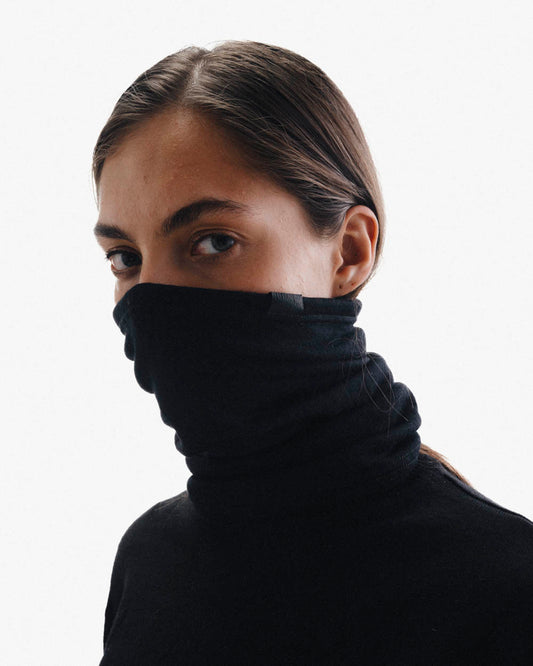
| Protect the head, neck, and nape on cold days | The Mask |
| Lightweight mask for wind and active days | The Stormerer |
Protector Polycolon® – as little material as possible under the helmet
Our Protector Polycolon® Beanie is the clearest example of why we work with this fiber.
The hat consists of 100% Polycolon® and is deliberately designed to be extremely thin.
The goal is not to pack as much insulation as possible on the head. The goal is a lightweight functional layer that adds hardly any bulk, transports moisture, and fits well under a suitable helmet.
This is why we particularly like using the Protector for:
- Ski touring
- Splitboarding
- Cross-country skiing
- High-altitude tours
- Mountaineering
- Intensive ski and snowboard days
Especially when touring, this is crucial for us. You don't need a thick winter hat during the ascent. You need a layer that is comfortable to wear and can handle your movement.
“When I'm on a tour or know that I will be moving a lot, I don't want to feel as much as possible on my head. That's exactly where the Protector is great for me. Thin, lightweight, close to the head, and the moisture doesn't simply get stuck in the material.”

Team Beanie – Polycolon® as a functional inner layer
Polycolon® does not necessarily have to make up the entire product.
In the Team Beanie , we deliberately use the functional fiber where it makes the most sense for us: on the inside.
The outer fabric consists of 50% acrylic and 50% cotton. Inside, a functional Polycolon® lining is used.
The idea behind it is simple:
The Polycolon® layer lies close to the head and transports moisture to the outside. The outer material layer can then absorb this moisture and pass it on to the environment.
At the same time, the Team Beanie with warmth level 2 has more substance than the very thin Protector.
This is therefore interesting for everyone who wants to combine function with a little more warmth.
Protector or Team Beanie?
| Protector Polycolon® | Team Beanie | |
|---|---|---|
| Polycolon® | 100% | As a functional inner lining |
| Thickness | Extremely thin | A little more material |
| Focus | Moisture, weight, movement | Function plus additional warmth |
| Typical use | Ski touring, splitboarding, cross-country skiing, intensive movement | Skiing, snowboarding, mountaineering, and cold active days |
| Under the helmet | Particularly suitable due to low material thickness | Depending on the helmet and fit |

Complete protection: When a mask makes more sense
A thin hat works well if it is mainly about the head and ears.
But on a cold winter day, that may not be enough.
Wind in the face, snow from the side, cold air around the neck, and a long time on the chairlift: Then you may want to protect not only your head, but also your neck, nape, and parts of your face.
That is what our masks are for.
The Mask – more warmth for cold winter days
Our The Mask is made for exactly such conditions.
The upper area consists of 94% Quick Dry Super Soft Cotton Touch Polyester and 6% elastane. The material fits tightly to the head, is breathable, and dries quickly.
Around the neck and nape, soft polar fleece is additionally used.
This allows The Mask to achieve warmth level 2 and offer more protection without creating unnecessary volume under the helmet in the upper area.
For us, it is particularly interesting for:
- Cold ski and snowboard days
- Freeride
- Ski touring
- Splitboarding
- Mountaineering
- Windy days with a helmet
The Stormerer – if you want a lighter mask
The The Stormerer deliberately takes it one step lighter.
It consists of 94% Quick Dry Super Soft Cotton Touch Polyester and 6% elastane, but has no additional fleece area.
With warmth level 1, it is suitable for active days, wind, changeable conditions, and situations where you want to cover your face and head, but do not need maximum insulation.
Especially for spring ski tours, splitboarding, or days with a lot of movement, this is an interesting alternative.

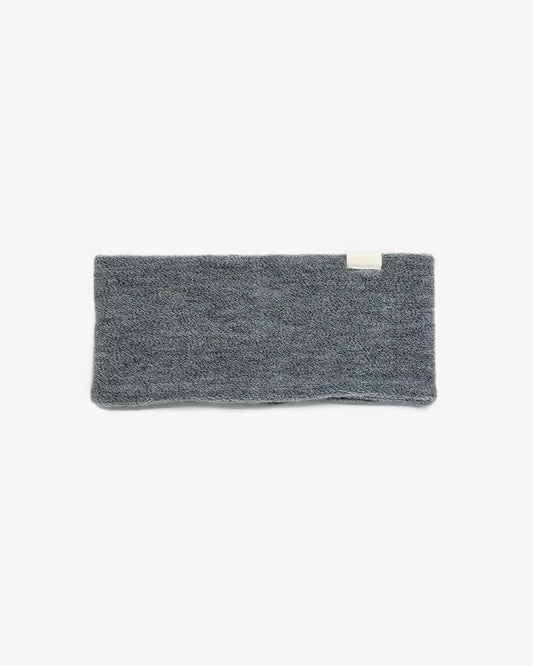
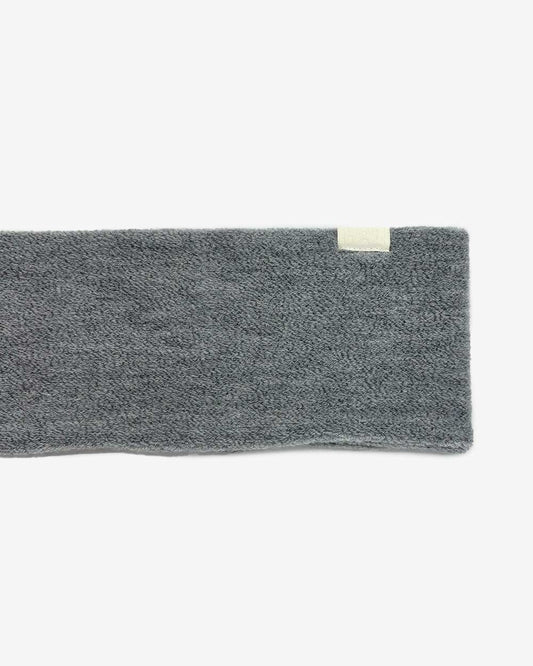
Polycolon® around the neck: the Team Neckwarmer
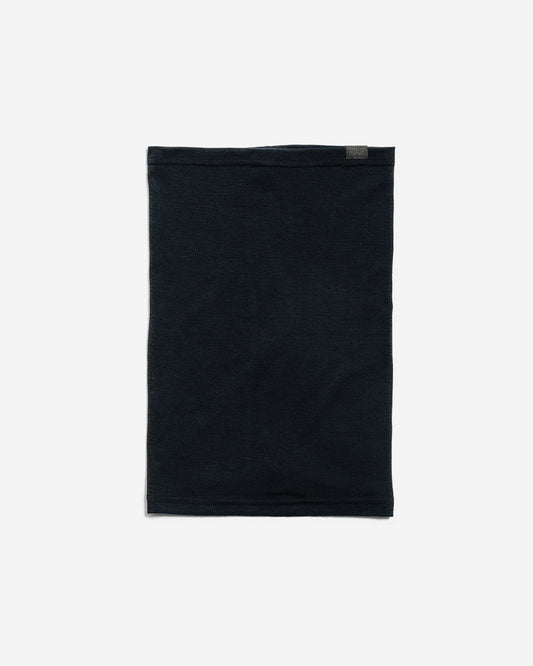
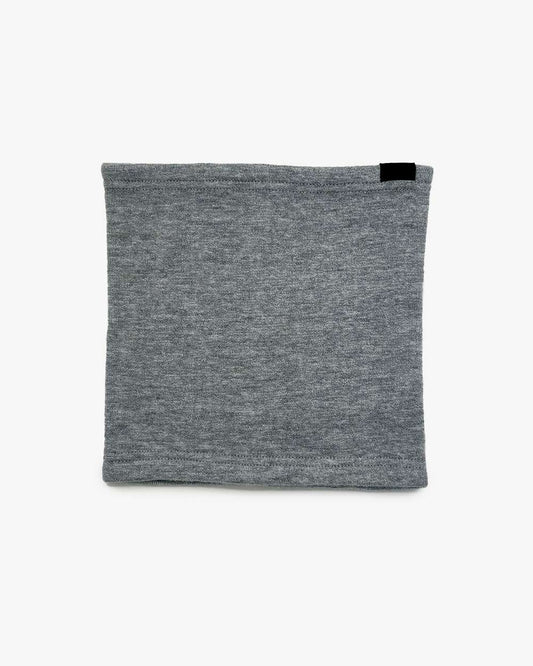
We use the same principle as with the Team Beanie for the Team Polycolon® Neckwarmer .
Inside is the highly functional Polycolon® lining. Outside, we use a blend of 50% cotton and 50% acrylic.
The idea behind it is simple:
The Polycolon® layer lies close to the head and transports moisture to the outside. The outer material layer can then absorb this moisture and pass it on to the environment.
With warmth level 2, the Team Neckwarmer is designed for active winter days.
Not only on the slopes.
Ski touring, winter hiking, mountaineering, or other sports at low temperatures are also typical situations where this construction plays to its strengths.
Polycolon® or Merino – which is right for when?
This is a question that cannot be answered with "better" or "worse".
We use both materials at HAE.
But for different days.
| Property | Polycolon® | Merino |
|---|---|---|
| Moisture | Absorbs practically no moisture itself and transports it to the outside | Can absorb moisture vapor in the fiber and release it again later |
| Drying | Very fast | Slower than Polycolon® |
| Weight | Extremely lightweight | Depending on yarn and construction |
| Odor management | Functional synthetic fiber | Merino often absorbs odors more slowly |
| Intensive movement | Very interesting | Also suitable depending on the product and exertion |
| Under the helmet | Very interesting with a thin construction | Depending on the thickness of the respective product |
| Long days / everyday use | Functional and easy to care for | Particularly pleasant due to temperature and odor management |
For a sweat-inducing ascent on a ski tour, I would personally reach for a very thin technical product.
For a long day with varying exertion, everyday use, or when the natural feel is particularly important to me, Merino can again be the better choice.
You can find more about the properties of merino wool in our HAE Merino Guide .
When I wear Polycolon® myself
For me, the decision is actually quite simple.
The more movement, the more interesting Polycolon® becomes.
“When I know I will sweat, I don't want as much warmth as possible on my head. I want a thin layer that works. Especially on a tour, when splitboarding, or under the helmet, that is why I like to reach for Polycolon.”
On the slopes, it depends more on the weather for me.
On a normal day, a thin solution is enough. If it is really cold or the wind comes, I want to protect my neck and face additionally. Then a mask quickly becomes more interesting.
“The Mask is one of those products for days when you already know in the morning: it’s going to be cold today. As little material as possible under the helmet, while providing more protection around the neck and throat – that’s exactly the combination that makes sense to me.”
That is actually also the reason why we don’t try to build a product for every situation.
The Protector has a different purpose than The Mask. And the Team Beanie, in turn, has a different one than both.
What matters is what your day demands of your gear.
How do I care for Polycolon®?
Polycolon® itself is a very easy-care and wash-resistant fiber.
For the pure functional fiber, Schoeller even specifies machine washability at up to 95 °C.
But this does not mean that you should wash your HAE product at 95 °C.
A finished beanie or neckwarmer is not made solely of Polycolon® fiber. Seams, labels, outer layers, material blends, and the overall construction must also be taken into account.
That is why, with HAE, the rule is always: The care label of the specific product takes precedence.
This is especially important with the Team Beanie and Team Neckwarmer, because Polycolon® is combined with cotton and acrylic there.
Frequently asked questions about Polycolon® and headwear under the helmet
What is Polycolon®?
Polycolon® is a functional fiber from the Schoeller Spinning Group based on polypropylene. The yarn is particularly lightweight, does not absorb moisture itself, and transports sweat to the outside. It is used, among other things, in sports, outdoor, and functional clothing.
Is Polycolon® polyester?
No. Polycolon® is based on polypropylene and is therefore not the same material as polyester. Both are synthetic fibers, but they have different properties.
Does Polycolon® absorb sweat?
Polycolon® itself absorbs practically no moisture. The fiber transports sweat and moisture to the outside, where they can be absorbed by further layers of clothing or evaporate.
Why does Polycolon® dry so quickly?
Because the fiber itself does not store water. As a result, significantly less moisture remains in the material, which would otherwise have to evaporate after exercise or washing.
Is Polycolon® warm?
Polycolon® is primarily a lightweight functional fiber and not a particularly thick insulation material. How warm a finished product is depends on its construction, knit type, and any additional material layers.
That is why our Protector is very thin, while the Team Beanie offers more warmth with its Polycolon® lining and additional outer layer.
Is Polycolon® suitable for skiing and snowboarding?
Yes. Especially with varying levels of exertion and under a helmet, low weight, breathability, and moisture transport are important. That is why HAE uses Polycolon® in the Protector Beanie, Team Beanie, and Team Neckwarmer for skiing, snowboarding, and mountaineering, among other uses.
Which hat is suitable under a ski helmet?
If you want to wear an additional hat under a ski helmet, it should be thin and fit closely without creating unnecessary bulk. A technical under-helmet hat like the Protector Polycolon® is much better suited for this than a thick knitted beanie.
What matters is that your helmet continues to fit correctly and according to the manufacturer’s specifications with the additional layer.
Can a thick hat be worn under a ski helmet?
A thick hat can change the fit of the helmet and create additional volume between the head and the helmet. That is why we generally recommend thin, close-fitting headwear under a ski or snowboard helmet, rather than a thick winter beanie.
Protector or Team Beanie – which is better under the helmet?
The Protector Polycolon® is made of 100% Polycolon® and is extremely thin. That is why it is our first choice when you want as little material as possible under the helmet.
The Team Beanie has an outer layer of cotton and acrylic as well as a functional Polycolon® lining. It offers more warmth and can also work depending on the helmet and fit, but it bulks out more than the Protector.
When does it make sense to wear a mask under a ski helmet?
A mask is particularly useful if you want to protect not only your head and ears but also your neck, throat, and parts of your face from wind and cold.
The Mask combines a thin, breathable upper section with polar fleece around the neck and throat. The Stormerer is lighter and is particularly suited for active use in less cold conditions.
Polycolon® or merino – which is better for sports?
During very intense exercise, Polycolon® has the advantage of absorbing practically no moisture itself and drying extremely quickly. Merino can absorb moisture vapor, regulate temperature, and often develops odors more slowly.
Which fiber is better therefore depends on the activity, temperature, personal warmth perception, and the specific product.
How do you wash Polycolon®?
The Polycolon® fiber itself is very wash-resistant. However, the respective care label always applies to a finished HAE product, because additional materials, seams, and labels may have different care requirements.
The right layer for your winter day
There is no perfect headwear for winter.
You need something different for a ski tour than for minus ten degrees on a chairlift.
A snowboarding day with lots of movement has different requirements than a windy day when you want to protect your face and neck as well as possible.
That is exactly why we work with different materials and constructions.
Polycolon® plays to its strengths where it needs to be lightweight, functional, and stay dry.
Sometimes a Protector Beanie is enough.
Sometimes you want a little more warmth with the Team Beanie.
And sometimes The Mask is exactly the piece you pack in the morning because it is already clear outside that it will be a cold day.
In the end, it is not about dressing in as much as possible.
It is about having the right thing for the day.
THE BEST DAYS ARE HANDMADE.
Sources and further information
The technical specifications for the Polycolon® fiber are based on the manufacturer information from the Schoeller Spinning Group.
When wearing additional headwear under a ski or snowboard helmet, the correct fit of the respective helmet is crucial. Therefore, always also follow the helmet manufacturer’s specifications.