




WELCOME TO THE HAE JOURNAL - STORIES AND INSIGHTS FROM THE ALPS
From snowboarding, freeriding, and climbing to people, craftsmanship, films, products, and the little peculiarities of life in the Alps.
In the HAE Journal, we collect stories about what constitutes and propagates Alpine culture.
HAE Blog
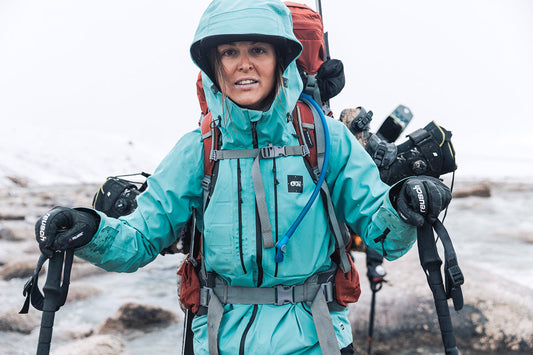
Léa Klaue - HAE WOMEN
Léa Klaue by Jeremy Bernard
Our HAE Women collection brings together inspiring snowboarders who, in their interviews, give insight into their philosophy of life and creative processes. Today, Léa Klaue , an athlete and social anthropologist, tells us about her adventures in the high mountains, her love of nature and the courage to face the uncertainties. She shares what it means to her to balance between artistic and athletic expression and how she experiences the power of community in the snowboarding scene. This story shows how versatile the connections between snowboarding, science and creativity can be.
What does adventure mean to you and how does it influence your creative side? For me, adventure is about navigating uncertainty. It's about going to unknown places or doing things without knowing what the outcome will be. It also includes the motivation and excitement of the "unknown". I am particularly drawn to the mysterious or unknown, and that is what fuels my creativity and imagination. I couldn't be creative without adventure - and the same goes the other way around.
How do you feel when you're standing on your board, whether in the snow or on the water? Are there creative parallels to these moments? When snowboarding, especially when freeriding or in challenging terrain, planning is crucial to minimize risks. As soon as everything is thought through and the line is prepared, I switch off my brain and follow my instincts. In these flow moments, I am fully concentrated and completely in the moment, with no room for reflection. This is exactly how my creative practice works: the most beautiful things arise intuitively from gut feeling, be it movements, lines, texts or ideas - but only after thorough preparatory work.
Léa Klaue makes turns in the deep Val D'Anniviers. Photo by Jeremy Bernard
Where do you get your creative inspiration from – whether on the mountain, at sea or in everyday life? I spend a lot of time in nature, whether it's trail running, cycling, splitboarding, climbing, hiking or walking. The natural elements, the weather and the mountains give me peace and clarity to organize my thoughts and create new ideas. I also consume a lot of works by other creatives: books, music, art, films, texts and mountain projects. I am very interested in what others are doing and absorb these impressions like a sponge. With this background, I then form my own ideas.
How is your personality reflected in your style on and off the board as well as in your creativity? I see myself as a very spontaneous person who often just starts things and sees what happens. At the same time, I am determined and focused, and if something really motivates me, I do everything I can to make it happen. This process often starts long before I consciously notice it. Maybe that's why I often take on challenging projects, like expeditions to difficult mountain regions. The process is what I enjoy most: developing ideas and implementing them step by step, and then seeing what happens.
Léa Klaue tiny in Kyrgyzstan. Photo by Jeremy Bernard
Are there any projects outside of snowboarding where you particularly express your creativity? In addition to snowboarding, I work as a social anthropologist and work at the intersection of art and scientific research, using creative methods such as film and creative writing. I am committed to finding beauty in human activities, even when dealing with difficult or complex topics. The world is pretty absurd and humanity is not doing well at the moment. However, I try to remain playful while understanding connections and phenomena. For me, snowboarding is also a creative and playful way of dealing with difficult things.
What makes you particularly proud of what you have achieved – athletically and/or creatively? This can also be professionally. I am proud that I was able to complete my PhD and pursue my snowboarding career at the same time, without one crowding out the other. The snowboard film projects that I have been able to complete have given me a lot of confidence. These processes have required a lot of perseverance and persistence, while at the same time opening up creative avenues that I would never have imagined. It is a wonderful feeling to realize that anything is possible.
Léa by Thibault Montoni
Is there a special woman, friend, artist or athlete who inspired you to follow your own path? As a young snowboarder, I was very inspired by the few professional female snowboarders I could see in magazines or films, such as Victoria Jealouse, Tara Dakides and Marie-France Roy. For me, it was huge to see that snowboarding wasn't just for boys, even though these women weren't given much space in the scene. In addition to these role models from the sport, I was also inspired by many female artists, directors, authors, activists, social scientists and philosophers who went their own way against the status quo - often in the face of great resistance from society.
How do you inspire other people (everyone, not just women) to follow their own path – be it through snowboarding, creative projects or simply in everyday life? I teach at various colleges and universities and sometimes supervise students in their projects. I try to convey to them that they should listen to themselves first and foremost and not be influenced by the expectations of society, parents, friends or the world of work. It is important to find meaning and joy in what you do and not to forget to give yourself enough breaks.
What does it mean to you to be part of the “Collection by HAE Women” and how did you bring your creativity into this project? It's great to be part of a team that comes from my region and is always evolving. I think it's really cool that HAE supports so many different and inspiring female snowboarders and I'm proud to be part of it. Each of us brings our own background and style and that shows how diverse snowboarding can be. Many brands have only one woman on their teams among many men and that's just not up to date anymore. After all, the snowboarding world shouldn't be like Smurf Village, where there's only one Smurfette. There are many different female riders who do cool things in their own way, just like the male riders. For this collection, we were able to bring our tastes and opinions together and create something that is as diverse as we are - precise, simple, bold and with a lot of style.
Léa likes steep couloirs. Photo by Thibaut Lamp
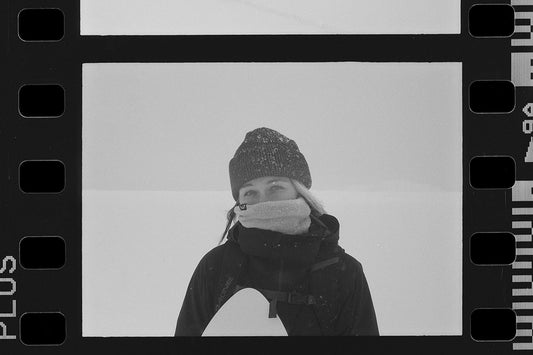
Daria Fuchs - HAE WOMEN
Daria Fuchs by Kuno Egli
This season we launched a small collection with our HAE WOMEN for the first time and conducted interviews with our riders, which we would now like to present to you in full. Today it is Daria Fuchs ' turn. In her interview, the passionate snowboarder and surfer tells us how her first trip to Fuerteventura changed her life and sparked her thirst for adventure. She talks about the power of throwing yourself into the unknown, the joy of nature and the importance of flow - in the snow, in the water and in everyday life. With her creative energy, whether surfing or in projects outside of sport, she encourages others to follow their own heart's path and be guided by their dreams.
Which moment in your life – sporting or creative – has had the greatest impact on you? What comes to mind? When I travelled to Fuerteventura at the age of 18 to try surfing, I immediately fell in love with the sport and was able to experience life outside the Swiss "matrix" for the first time. After that, I completed my training, worked for two months and then moved to the Canary Islands. Since then, I have spent the summer months surfing and the winters snowboarding. That one week on Fuerteventura shaped my life.
What does adventure mean to you and how does it influence your creative side? For me, adventure means throwing myself into the unknown - whether it's a country whose language and culture I don't know, or discovering a new mountain or surfing spot. For me, adventure means excitement and stepping out of my comfort zone. This step teaches me to stay flexible and open.
Daria Fuchs' adventure outside the Swiss “Matrix” .
How do you feel when you're standing on your board, whether in the snow or on the water? Are there creative parallels to these moments? I think I have experienced pretty much every emotion on a snowboard and surfboard. It can change from frustration and fear to success and pure happiness within minutes. The best feeling is to be present and in the moment. Then I feel in the flow and connected to myself, the board and nature. This connection with the universal is probably the strongest and most beautiful feeling that I strive for.
Daria Fuchs surfs waves in different states of matter. Photo: Aaron Schwartz
Where do you get your creative inspiration from – whether on the mountain, at sea or in everyday life? I like to be inspired in the moment and on site. Whether on the mountain or in the water - I love watching others and learning from them. If I particularly like a style, I concentrate on all the movements. I have been able to learn a lot and be inspired by observing.
How is your personality reflected in your style on and off the board as well as in your creativity? Since I am a person with a lot of fire, I would say that this manifests itself as power in my style. I would also describe myself as a free spirit, because in the backcountry I like to rely on my intuition and creativity. I love standing on top of the mountain, freely thinking up my line and then riding. Whether on the water or in the snow - I love dancing with the elements.
Daria Fuchs by Kuno Egli
Are there any projects outside of snowboarding where you particularly express your creativity? As a trained hairdresser, I have always been able to express myself creatively in my career, which gives me a lot of joy. I love letting myself go and getting into a flow by making music with friends, dancing, taking photos, cooking and writing.
What makes you particularly proud of what you have achieved – athletically and/or creatively? This can also be professionally. In a few weeks I will release my first self-portrait short film. The film is about snowboarding and surfing and bringing softness and tenderness to a harsh environment. I think the film is special and different and being lucky enough to be friends with Morgan Maassen has made it an artistic masterpiece.
Daria Fuchs by Morgan Maassen
How do you inspire other people (everyone, not just women) to follow their own path – be it through snowboarding, creative projects or simply in everyday life? I follow my heart and I think a lot of people see that in me. I try to spend as much time as possible doing what makes me happy and not limiting myself. No matter how big my dream is, I believe that anything is possible if I really want it with all my heart. I hope to encourage people around me to follow their heart's path and not limit themselves.
Daria Fuchs by Morgan Maassen
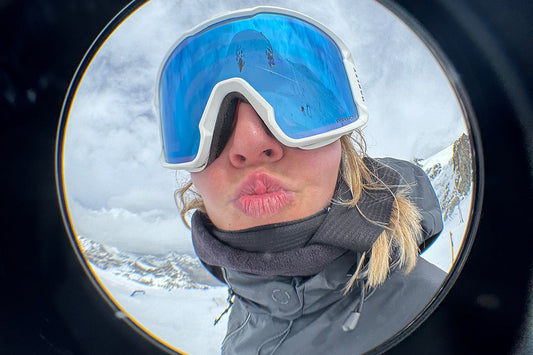
Jenni Albert - HAE WOMEN
With our new COLLECTION BY HAE WOMEN we are celebrating the diversity and strength of our female riders for the first time. As part of this, we are conducting interviews with inspiring personalities who share their passion for sport, nature and adventure with us. Today the focus is on Jenni Albert , who takes us into her world of snowboarding and her special connection to the mountains. She tells us how her father influenced her, what inspires her about adventures in the snow and far away, and how she lives out her creative side. Her life path shows how important it is to leave your comfort zone and follow your heart - whether it's freeriding or through creative projects.
Which moment in your life – sporting or creative – has had the greatest impact on you? What comes to mind? I still remember the skiing holidays in Engelberg very well. Every year, thanks to my grandfather's holiday home, we had the opportunity to spend the winter in the snow. After a few years of ski school, I wanted to switch to snowboarding - mainly because of my father, who claimed to have always been a "boarder". I can still see his old F2 board with hard boots in front of me and his bright yellow Barryvox, which didn't have a display back then. His style inspired me and I wanted to be as cool as him. While I was at the snowboard school in Gerschnialp, he often went freeriding. His favorite slope was "z Steibergli" or the "Laub" in Engelberg. I could watch him from class when he returned from the powder snow. These holidays in the mountains had a big impact on me. Since my father died a few years ago, the mountains have been a special connection to him for me.
What does adventure mean to you and how does it influence your creative side? For me, adventure means letting go of the familiar and taking the step into the unknown. In the summer of 2023, I spontaneously decided to travel to New Zealand to work as a snow sports instructor. Without knowing anyone, I moved into a shared apartment with strangers and many good friendships developed. The culture in New Zealand was particularly inspiring for me. Nature has a different significance for the Māori than it does for us; they believe that the mountain has a soul and that people and nature should live in harmony. Nature speaks to them and imparts knowledge to them. This new perspective on everyday life and life is a source of creativity for me. After all, creativity thrives on different perspectives.
Where do you get your creative inspiration from – whether on the mountain, at sea or in everyday life? My inspiration is a mixture of everyday life and the mountains. I am always fascinated by the contrast between the orderly everyday life and the rugged landscape of the mountains. I find the combination of danger and security that I feel at home on the sofa exciting. When I sit on the chairlift, I enjoy observing my surroundings and pausing for a few minutes.
Jenni in a moment of freedom and enjoyment. Photo by Simona Schürch
How is your personality reflected in your style on and off the board as well as in your creativity? In everyday life, I often notice that I like to be in control and worry about what other people think of me. On the snow, I can let go and worry less - or at least try to. You can probably tell by my riding style: some days everything goes perfectly, others nothing works at all. That's just part of it, isn't it? My goal for the coming season is to brake less!
What makes you particularly proud of what you have achieved – athletically and/or creatively? This can also be professionally. I am simply grateful that I have been able to experience so much at the age of 23, and in many areas. My passion is now my job. After graduating from high school, I didn't want to go to university straight away, but wanted to change my environment completely and moved to Davos for my first season as a snowboard instructor. At the time, snowboarding was just a break for me before studying. But during the season, that changed completely and I didn't want to do anything else. Today, a few years later, I have found the perfect balance between practice and theory with my part-time job in the snowboard industry and part-time studies. I never thought I could turn my passion into a job. For me, snowboarders were always the "cool" ones on the mountain, and now working in this community is a real highlight. I grew up in Aargau, without mountains on my doorstep, and now I live close to the ski areas, almost where other people go on holiday. I am proud of that and very grateful. I also spend a lot of time in the snow as a J+S expert and at freeride competitions. The competitions gave me access to freeriding, which was previously unthinkable for me. Today I know how to respect off-piste terrain and how to handle it safely. Through the competitions I learned how important it is to leave your comfort zone.
Jenni also likes the thrill of freeride contests. Photo by Hugo Schleicher
Is there a special woman, friend, artist or athlete who inspired you to follow your own path? In my first season as a snowboard instructor, I met a lot of great people. I was particularly inspired by Katie Erdin, my team leader at the snow sports school in Davos. She encouraged us to sign up for the training courses and always pushed us, including through extra training sessions. With her, there was never a "you can't do it" - I found that extremely encouraging. Under her leadership, the snow sports school became like a second family and I learned that it's okay to wear a beanie all year round. Without Katie, I wouldn't be where I am today. Thank you, Katie!
Katie Erdin from the snow sports school in Davos
How do you inspire other people (everyone, not just women) to follow their own path – be it through snowboarding, creative projects or simply in everyday life? I think sharing is important to inspire others in a conversation. Sometimes it's difficult to go your own way because you worry a lot about what others think or you don't feel good enough - be it for a job, a tour or another goal. I try to show all the great opportunities you have to achieve something and that you should do it with joy and fun.
Jenni in “send mode” Photo by Greg Ceas
What does it mean to you to be part of the “Collection by HAE Women” and how did you bring your creativity into this project? Being part of the project with Celia, Daria, Elena and Léa is incredible. Each of us brings our own inspiration and individual story and I think the "Collection by HAE Women" represents diversity as we all come from different backgrounds. The different beanies created in collaboration with HAE represent our different paths well. What unites us is the passion for winter sports - and that's what matters!
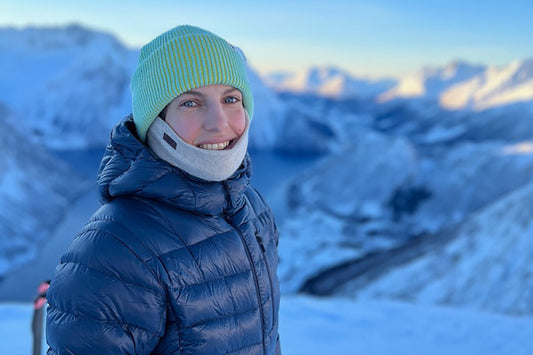
Elena Könz - HAE WOMEN
In our series of interviews with the HAE Women , an inspiring athlete gives us insights into her journey through the highs and lows of snowboarding. Elena Könz talks about formative experiences in the mountains, the creative power of nature and the courage to get back up again after setbacks. With a unique combination of athletic determination and artistic sensitivity, she gives insights into her creative side and tells us what makes her particularly proud about her gold FIS medal and her successes.
Which moment in your life – sporting or creative – has had the greatest impact on you? What comes to mind? A defining moment in my life was an accident in the backcountry a few years ago. Strangely enough, nothing happened to me - but it was definitely a fine line of luck. This experience made me question my passion for snowboarding and even considered quitting altogether. In the end, however, it helped me a lot to get back out there and face my fears in order to process what had happened. This process led to me being out in the mountains today with a different awareness and a deeper appreciation.
Handplant by Elena Könz by Kevin Cathers
What does adventure mean to you and how does it influence your creative side? For me, adventure means that which cannot be planned. This uncertainty, which is of course estimated and minimized as much as possible when planning tours, triggers a sense of anticipation. Perhaps an adventure also feels good because it requires you to be present with all your senses in order to be able to react to the unplanable.
How do you feel when you're standing on your board, whether in the snow or on the water? Are there creative parallels to these moments? It's the most beautiful way to flow through time. When I was a teenager, I once tried to explain to my great uncle, who is an artist, that snowboarding can also be an art form - but he couldn't understand. Maybe you can understand?
Elena Könz jumps into the lake with a backflip. Photo by Kevin Cathers
Where do you get your creative inspiration from – whether on the mountain, at sea or in everyday life? Paradoxically, I am very systematic when developing creative ideas. For this reason, I only become creative when I really want to or have to, and often develop project-related ideas. I am influenced by the images, shapes and colors that become deeply "burned in" when I am out in nature.
Are there any projects outside of snowboarding where you particularly express your creativity? Yes, in addition to snowboarding, I love painting, drawing and taking photographs. However, I often don't have the time for it. A personal wish is to change this in the near future and give art more space in my life again.
Elena Könz loves to express herself creatively.
What makes you particularly proud of what you have achieved – athletically and/or creatively? This can also be professionally. I am particularly proud of my medal as World Champion in Big Air. The further away I am from this success, the cooler I think it is to have such a gold FIS medal. The commitment and willpower that I was able to muster to follow this path impresses me even now.
Elena Könz Art
Elena on YouTube

The women behind the Collection by HAE Women
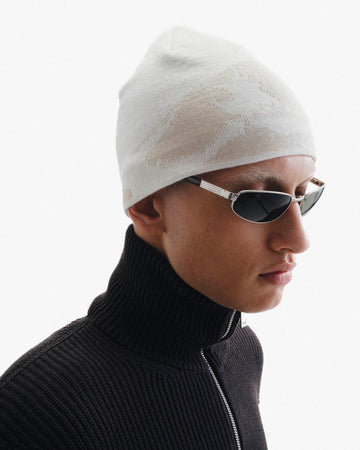
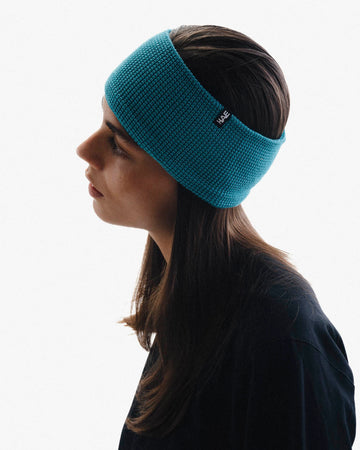
The Collection by HAE Women is far more than a range of high-quality beanies —it's a tribute to five women who have forged their own path in the mountains and, in doing so, inspire others to do the same. Each beanie in this collection is the result of the vision of these women, who excel through their talent and creativity, whether on a snowboard, in the water, or in artistic projects. The HAE Women embody a blend of courage, determination, and a strong sense of community that accompanies them through the Alps and into all of life's adventures.
Daria Fuchs - crazy style! Photo: Aaron Schwartz
This collection reflects not only the experiences and values of our HAE Women, but also their passion for nature and the freedom they find on their own paths. Their stories range from the courageous decisions that have shaped them along the way to the deep connection to nature that inspires their creativity. They know how to stay warm in the cold of the mountains, but also how to warm hearts with openness and joy.
In this post, we introduce the five women behind the Collection by HAE Women : snowboarders, artists, and role models who share their passion with a collection that is as unique and strong as they are. Their stories and experiences have shaped these hats, making them an expression of strength and adventurous spirit—qualities that encourage us all to forge our own path.
Celia Petrig in Laax
Celia Petrig: The flow that makes everything possible
For Celia Petrig ( instagram ), snowboarding is more than just a sport—it's a deep immersion into the "flow state," where everything feels harmonious and effortless. "Snowboarding allows me to enter my flow state, where everything feels free, harmonious, light as a feather, and at the same time very powerful and strong," Celia says, describing this special moment that inspires her every time. In flow, she experiences a kind of "super power," where she perceives everything as if in slow motion and fully connects with her surroundings.
Celia Petrig inspires the younger generation.
Celia not only inspires with her own flow state, but also passes this feeling on to others in her projects. In her latest video project, Laax Originals – Celia Petrig, she gives an insight into her personality and philosophy of life and shows how flow shapes not only her sport, but also her life. She is actively involved in coaching and training and leads “Girls Shred Sessions” as well as her own shred sessions to help other women find their own path and grow. “Snowboarding gives me the opportunity to inspire others by showing them how much fun it is to go your own way,” says Celia. She not only passes on her knowledge, but also inspires others to find their own creative path and follow it with energy and passion.
You can find the complete interview HERE.
Daria Fuchs: The surfer who lives her passion between mountains and waves
Daria Fuchs ( instagram ) embodies the perfect balance between two worlds: the waves of the ocean and the peaks of the Alps. She discovered her passion for surfing on a trip to Fuerteventura, where she first got on a board. That week changed her life forever and inspired her to spend her summers among the waves and her winters in the mountains. "That one week on Fuerteventura shaped my life," says Daria. Since then, she has lived in this dual world, characterized by the balance between mountains and sea.
Daria Fuchs by Kuno Egli
In the water and snow, Daria experiences an intense connection with nature. "The most beautiful feeling is being present and in the moment," says Daria, describing her deeply felt connection to the elements, which brings her into flow. While surfing and snowboarding, she experiences a harmony with herself and nature that fulfills and inspires her. Daria shares this passion and openness by demonstrating that a free mind and an open heart lead us to the greatest adventures.
You can find the complete interview HERE.
Daria Fuchs on one of the boards that mean the world to her.
Elena Könz: The artist and world champion
For Elena Könz ( instagram - youtube ), snowboarding is not just a sporting challenge, but also a form of artistic expression. As a teenager, she explained to her great-uncle, an artist, that snowboarding could be just as creative as painting or sculpture. "As a teenager, I tried to explain to my great-uncle that snowboarding could also be an art form," Elena says. Today, she sees the tracks she leaves in the snow as works of art that reflect the freedom and creativity of her spirit.
Elena Könz shortly before drawing her lines in the icy canvas
The world sewing champion.
But that's not all: her discipline and determination led her to the gold medal at the Big Air World Championships in 2015. "The further away I am from this success, the cooler I find it," she says, looking back on her achievement. In addition to snowboarding, Elena also finds her creative inspiration in art. She paints, draws and photographs, inspired by the Alpine landscape and the colors and shapes she discovers in nature and the city. "A personal wish is to give art more space in my life again," she reflects. Elena's art and her success in sports are testaments to her dedication and her will to live her dreams and, in doing so, inspire others as an artist and world champion.
You can find the complete interview HERE.
Jenni Albert: The inspiration who encourages others to follow their own paths
For Jenni Albert ( instagram ), the mountains are not only a place of challenge, but also a place to encounter herself and others. Her father, who introduced her to snowboarding, remains her greatest inspiration to this day. She discovered her love of the mountains through him, and after his death, the mountains became a place that maintains her connection to him. "Since my father's death, the mountains have represented an even greater connection to him for me," Jenni says, describing the special meaning the Alps have for her.
Jenni Albert at one of her contests.
She was particularly influenced by Katie, her former team leader in Davos, who encouraged her to continue pursuing her snowboarding career. "Under Katie's guidance, it was like a second family," Jenni remembers of the mentor who pushed her to achieve more and grow. Today, Jenni inspires others by showing the importance of believing in yourself and following your own path. "I try to show all the great opportunities you have to achieve something and that you should have fun doing it," explains Jenni. For her, snowboarding is not just a sport, but also a way to connect with others and build a community based on trust and mutual respect.
You can find the complete interview HERE.
Jenni Albert tested the Edelweiss hat from the Collection by HAE Women this summer.
Léa Klaue: The storyteller behind and in front of the camera
Léa Klaue ( instagram ) describes snowboarding as much more than just a sport—for her, it's a way to explore and immerse herself in her surroundings. "Snowboarding has become a means for me to explore how I move and navigate my environment," she explains, describing the feeling of controlling a steep descent as a kind of superpower that puts her in a state of hyperfocus and harmony. In her youth, she started as a freestyle snowboarder before evolving into a big mountain snowboarder and learning to love the remote, steep terrain.
Léa Klaue also travels in the Alps in summer.
Léa participated in freeride competitions for years and consistently ranked among the top 10 in Europe. Today, snowboarding is less of a competition for her and more of a personal journey, constantly challenging her mental and technical skills. Her preferred tool is now the splitboard, which she uses to tackle remote mountains and challenging high-altitude tours. Whether in the Alps, the Andes, or on expeditions in Japan and Kyrgyzstan, Léa is always seeking new solitude and tells these experiences in films such as the award-winning short film Clouds (2023). Together with partners, she brings stories that combine adventure and environmental awareness to the world.
You can find the complete interview HERE.
Léa Klaue - photo: Jeremy Bernard
The Collection by HAE Women
The Collection by HAE Women brings together more than just stylish hats – it embodies the stories and passion of five unique women who are leaving their mark on the Alps and on life, and who have inspired many of us at HAE. These five snowboarders, surfers, and artists share their vision, strength, and courage to inspire others to find their own paths and live authentically. The collection invites you to become a part of these stories. In the near future, we will introduce each of these women individually and delve deeper into their worlds – stay tuned!

From field to fiber: How SwissFlax is leading the renaissance of flax in Switzerland
Flax, a plant that has been used in textile production for centuries, is experiencing an impressive return to Swiss agriculture thanks to SwissFlax. At HAE , we used the high-quality raw material from SwissFlax to create our limited edition Alpine Flaxer Beanies . Dominik Füglistaller , Managing Director of SwissFlax , was available for an interview a few days ago to tell us more about his vision. Dominik's goal is to make flax sustainable and regional again - a vision that is closely aligned with HAE's values. Like HAE, SwissFlax is committed to sustainability and quality. In this interview, Dominik shares his experiences and provides insights into the challenges and opportunities that flax offers for the future of the textile industry.
We used the raw material from SwissFlax for thelimited edition "Alpine Flaxer" hats .
How did you come up with the idea of reviving flax in Switzerland? Dominik Flüglistaller, SwissFlax: This was during my agronomy studies. For my diploma thesis, I wanted to try something new and not focus on standard crops like wheat, corn, barley, or rapeseed, so I decided on flax. I tested different varieties and seed rates. When the flax bloomed in mid-June, I knew this plant had potential.
What fascinates you about flax as a raw material? Fundamentally, it's the versatility of its uses, as the Latin name suggests: Linum usitatissimum (much-usable flax). In other words, the fibers can be used for clothing, carpets, and cords; the shives (the woody part that remains during fiber processing) can be used as animal bedding or processed into pressed boards, for example, and the flaxseeds can be used for human consumption.
Why would someone prefer flax over other materials? Because it's a natural material with a history and origins here. The material is also breathable, antibacterial, extremely comfortable to wear, and can also have a cooling effect. With a HAE beanie made of SwissFlax, you're sure to keep a cool head.
And this is what the flax fibers look like!
What is the process from flax cultivation to the finished product? The flax is sown in late March or early April. It blooms in June and is picked in July, then reeded and baled in August. The bales then need to rest for a while. In winter, the fibers are mechanically extracted. Afterward, the fibers must be carded and finally wet-spun. Only then do you get the linen yarn.
What are the environmental benefits of flax compared to cotton or synthetic materials? It doesn't require irrigation and is very undemanding in terms of nutrient requirements. This has allowed us to completely eliminate nitrogen fertilizers in recent years. Furthermore, we only use one herbicide in production, meaning we produce according to IP-SUISSE guidelines. By comparison, around one-third of the world's pesticides are used on cotton. Furthermore, it's a renewable resource, which can't be said for synthetic materials.
What hurdles did you have to overcome to produce flax in Switzerland? All the know-how had to be rebuilt and partners had to be sought who would support us along the value chain all the way to the finished yarn. Moreover, the flax industry wasn't used to the idea that we only wanted our material processed from raw material to finished yarn, and that we were unwilling to compromise on further processing and traceability.
The flax in the fields of SwissFlax
How do you see the future of flax in the textile industry? I believe in great and diverse potential. Before World War II, we once had 200 hectares under cultivation in Switzerland. Today, we're back at 7.5 hectares and producing around 3.5 tons of yarn. Flax/linen is currently very popular, particularly because of its cooling effect and pleasant wearing comfort. Accordingly, I expect demand to continue to rise and that we'll certainly be able to expand our cultivation area to double digits in the future. Worldwide, this is a real boom. The cultivation area in Europe has doubled in the last 10 years (currently around 170,000 hectares).
Are there any upcoming innovations at SwissFlax that you can tell us about? Yes, I can actually reveal this: at the 2025 Federal Wrestling and Alpine Festival in Glarus, all wrestling trousers will once again be made from raw materials from Switzerland. This hasn't been the case for the last 70 years. I'm very pleased about that.
How important is it to you to work with local farmers? In my opinion, that's the most important thing. First of all, as an agronomist, I'm very close to the farmers. I also think that at SwissFlax, we've succeeded in transforming our farmers into more than just raw material suppliers, but rather into an integral part of the company/limited liability company. Furthermore, we've achieved our first goal by paying farmers a completely fair price, allowing flax to become a lucrative business on the farm. We also have a special payment system here, which I believe is unique in agriculture.
Dominik Flüglistaller, Managing Director of SwissFlax
What does sustainability mean to you and how does it shape your company? It's in the company's DNA. We don't make decisions without considering sustainability. This is truly inclusive. In my view, flax, as a local raw material, also inherently contributes to sustainability. The plant doesn't require much input (pesticides, fertilizers, no irrigation), and as a flowering plant, it also provides insects with nectar and pollen and is good for biodiversity. Plucking loosens the soil again, and retting reintroduces nutrients into the soil. Furthermore, the plant is utilized to its full potential.
Thank you, Dominik, for your valuable time and the wonderful Swiss flax you delivered to us. For all readers: The limited edition is available for purchase here .

THE HISTORY OF A LEGENDARY HAT: FROM THE 70S TO THE REINTERPRETATION BY HAE
The 1970s marked a turning point for the outdoor lifestyle in Switzerland. While the Alps had always been deeply rooted in Swiss culture, this was a time when a wider population discovered the mountains as a place of adventure, freedom and sport. Winter sports, especially skiing, experienced a real boom. New ski resorts were created, ski lifts and cable cars made the peaks accessible to everyone. People flocked to the mountains, not just to go on holiday, but to experience nature in all its splendour. It was the birth of a new attitude to life - the Alps as a place where you could find freedom and community at the same time.
In the midst of this boom, a simple but meaningful accessory emerged: a legendary hat from the Schweizerische Kreditanstalt ( SKA ) . Originally issued as a promotional gift by a Swiss bank, it quickly found its way onto the ski slopes and into mountain huts. The red and white colors not only symbolized Swiss identity, but became an emblem of the blossoming outdoor culture. The beanie became more than just a fashion accessory - it embodied the freedom and spirit of adventure that so many people sought in the Alps.
Adventure and functionality in focus
The legendary beanie, originally a promotional gift from a Swiss bank, quickly became a popular accessory - simple, functional and perfect for alpine conditions. It stood out, not because of its striking design, but because of its presence on the heads of skiers, hikers and mountaineers.
The beanie became a symbol of the new outdoor lifestyle that celebrated freedom, adventure and community in the mountains. With its simplicity and practicality, it caught the attention of those rediscovering the Alps - and it remained in people's minds as a timeless companion.
Cultural Identity and the Colors of the SKA
The beanie was distributed by the Swiss Credit Institute (SKA) and was in the colors red, white and blue, which originally represented the bank. But it quickly became much more than just a promotional gift. Its simplicity and functionality made it a symbol of the outdoor lifestyle that so many people discovered for themselves at that time.
The beanie reflected the essence of “Swissness”: functionality, simplicity and a deep connection with the mountains. It not only stood for fashion, but became part of an identity that celebrated freedom in nature and pride in one’s own origins.
The Change of Youth and the Rise of Recreational Sports
During this period, youth in Switzerland were experiencing a change. Young people were looking for new ways to express themselves and to break away from traditional values. Outdoor sports, especially skiing and mountaineering, offered a perfect opportunity to experience freedom and adventure in nature. Skiing, once an elite pastime, slowly evolved into a leisure activity for everyone - regardless of age or background.
This change was reflected in the rise of recreational sports, which drew more and more people to the mountains. The hat became a constant companion in the Alps - worn by young adventurers seeking a new sense of freedom, as well as by experienced mountain sports enthusiasts. Whether on the ski slopes or hiking trails, the beanie embodied the lightness and uncomplicated outdoor lifestyle that, for some, became the epitome of freedom and self-realization at that time.
As a limited edition now at HAE - The CH41 1291 2006 1815 2402 7 hat - order here
The reinterpretation of the beanie by HAE
Today, almost half a century later, we at HAE are reviving the legendary beanie with a new interpretation. Our version, the CH41 1291 2006 1815 2402 7 Beanie , takes up the timeless design and values of the 1970s: functionality, simplicity, the spirit of freedom in the mountains.
With modern standards of quality and sustainability, we rely on high-quality materials and conscious production. Our beanie remains true to the original ideals - it is more than just a fashion accessory. It embodies the connection between past and present, between tradition and modern adventurous spirit. Just like back then, it is a companion for everyone who loves life outdoors in nature. And it is thought through down to the smallest detail. If you don't believe us: take a close look at the numbers in the product name.

NEW DROP: LINES COLLECTION – THE HIDDEN TRACES OF THE ALPS
Anyone who truly knows the Alps knows that the magic of the mountains often lies off the beaten track. Every mountain in the Alps has its iconic runs, named by local freeriders. With the limited-edition caps and shirts in our Lines Collection, we want to pay tribute to these legendary runs. These are the secret freeride lines that only those willing to delve deeper into the alpine world can discover. Our products embody precisely these moments—not as a loud statement, but as an expression of the quiet passion for the mountains that drives us.
The lines on our shirts
Each T-shirt from the Lines Collection features one of these lines, the kind that will make your heart race on a freshly snowy winter morning. Our HAE Friends have selected their very own favorite lines that evoke special emotions in them. These are usually the local runs right outside their front door that evoke a sense of freedom, adventure, and alpine connection with every turn. These lines, whether "Col de Cou," "Surprise," or "Megawatt," are more than just names—they are vivid memories of unforgettable days with good friends and an expression of their deep connection to the mountains.
The shirts from the limited Lines Collection
Upcycled caps with unique patches
Our Lines Collection caps go one step further. Instead of throwing away old but unused products with a dated logo, we gave them new life by adding hand-stitched patches. Each patch represents an iconic freeride line—be it "La Banane," an iconic line in the western Valais Alps; "Golmbach," a route through deep powder in the Valley of Valleys; or "Gerwetsch," a descent near the Matterhorn. These lines tell the story of snowy descents, quiet moments, and the adventures you can only experience in the mountains.
By hand-stitching the patches in our small HQ in the heart of the Alps, each cap becomes a unique piece – and more importantly, a symbol of our respectful use of the resources available to us. Handcrafted and carefully stitched onto the original logo, these caps are not only stylish but also a statement for sustainability and the alpine lifestyle.
Old but unused caps with the new Lines patches - sewn on by hand here in Valais.
Live the passion for alpine adventures
Our Lines Collection isn't just meant to be worn—it's meant to fuel your passion for the mountains and freeriding. It represents what it means to be in the Alps, to experience them, and to feel that passion in your everyday life. Each shirt and cap is meant to remind you that the mountains aren't just a place, but a feeling that lives within you. Whether on the slopes, in the city, or somewhere in between—these products are designed to ignite your alpine passion and become a part of your own adventure.
Get the limited edition " Lines Collection " exclusively in our online shop!

INTERVIEW: FROM HÄ? TO HAE – MAT AND SEBI BUMANN ON THE COURAGEOUS REPOSITION OF THEIR BRAND
We sat down with Mat and Sebi Bumann to find out why they re-orientated the entire brand and changed the logo. How did they come to this joint decision with their team and long-time companions? What were the considerations behind this change and what does it mean for the future of the brand? Read their motives in the interview now.
Why did you change the logo and name of your brand after 18 years?!
Matthias: "We can't answer that quickly and we need to go into a bit of detail. The change to HAE was really an intensive internal process. We involved the whole team and all the people who have been with us since the beginning - people like Silvano, Levi, Anto, Sämi, Caldi, Ändu, Schüli, Gregi, our families and many friends. In fact, we have been thinking about changing our branding for years. Silvano has often brought up the idea."
Sebastian: "Yes, I remember. About 18 months ago we decided to really take this step. Since then it has been an exciting journey with many intensive discussions and a lot of work. It wasn't just about a new logo or a new name, but about rethinking our entire brand presence - from the website to the packaging right down to the smallest underwear label. We wanted to adapt everything."
Matthias: "Exactly, our goal was to create a brand identity that better expresses our deep connection to the Alps and the authentic way of life that we all share. We wanted our entire look to reflect these values."
Sebastian: "And we noticed that our old brand, with the logo and the name hä?, simply didn't suit us anymore. hä? was created more or less by chance in 2006, when we were still in high school. Just as we have evolved, our brand has also changed. It has been a wild ride with many ups and downs, and we have learned a lot along the way."
Matthias: "With HAE we are now sending a clear signal that honors our history and origins, but also creates a new clarity and modernity. It is important that the name is pronounced as it used to be, so that we can preserve our roots even as we continue to develop."
Sebastian: "It was important to us that this change came not only from us as founders, but also from all those who have helped shape our journey from the beginning. Together we defined the new path and decided that now is the right time to take this new direction."
Matthias: "And we really hope that with this change we can offer our customers added value and make our brand even more authentic."
What remains the same at HAE despite the rebranding?
Sebastian: "Our deep-rooted passion for the mountains and the adventures they offer remains unchanged. We want to continue to inspire people to experience the mountains and write their own stories. These values have been at the heart of our brand since day one."
Matthias: "Absolutely, and that's also because we are all 'Raised by the Alps'. We were very lucky to grow up here in the Alps, surrounded by nature, which shaped us just as much as our parents and friends. Schüli in Stans, Ändu in the Solothurn Jura, Zösi in Innsbruck or us here in Valais - we all spent countless hours outside, as children, teenagers and adults."
Sebastian: "You said that really well (laughs) and you hit the nail on the head. Whether snowboarding, skiing, climbing or flying - these experiences in nature have had a profound impact on us. The Alps have 'educated' us, so to speak, and have contributed a great deal to who we are today."
Matthias: "And that doesn't just apply to us as a brand, but above all to us as people. This alpine spirit is what we want to convey to the outside world with HAE. These are our roots, and we remain true to them."
What does the new branding mean for your customers and what new opportunities does it open up for them? What do they actually get out of it?
Matthias: "With the new branding, we want to give our customers the opportunity to feel a deeper connection to the values that drive us. It's about opening up new experiences and seeing them not just as buyers, but as part of a larger community of adventurers who share our passion for the Alps. The new branding is intended to strengthen the sense of belonging and invite our customers to actively participate in our journey and create their own story."
Sebastian: "I agree with you. To deepen this connection, we also want to create a clear and consistent narrative that makes clear our commitment to alpine life and adventure. That's why it's important to us to organize platforms and events where our community can share their own adventures and experiences. In this way, we not only create inspiration, but also a living narrative that everyone can participate in."
Matthias: "That's exactly the point, and that's why we've also developed our products further. Many designs are now of even higher quality, and we use new materials, some of which come directly from the Swiss Alps. For example, we've developed new beanies made from Swiss flax. We've also completely redesigned our handmade boxes and had them produced here in Switzerland to show our connection to the region even more strongly."
How does the new branding, including the logo and design, reflect HAE’s values?
Sebastian: "The new branding really reflects our core values - such as independence, storytelling, adventure and the community spirit. It shows the courage and determination it takes to take things into your own hands in the mountains. But it also underlines how important the community is. Without the support of the people you can rely on even in the worst winter storms, many things would not be possible."
Matthias: "Right. That's what makes our branding so special. It expresses these values through a clear and dynamic visual identity that shows both our timeless connection to nature and our innovative strength. With the new design, we are creating something that combines permanence and connection with the Alpine culture - and also with the people who share these experiences with us."
Sebastian: "The mountains have taught us to trust in ourselves and at the same time to appreciate the power of community. The new branding should embody exactly this balance - our journey that has made us what we are today."
Matthias: "Yes, and I hope that our new direction will make this even clearer. We want these values to be more tangible. In the past, we have sometimes lacked this, and feedback from customers, friends and other important people in our lives has shown us that we need to be even clearer here."
What were the biggest challenges during the rebranding and how do you ensure that HAE remains authentic?
Matthias: "The biggest challenge was finding a balance between our previous identity and the future we see for HAE. It was crucial to honor our roots and the history that brought us here as we continue to evolve. Our customers support us because they share our history and values. That's why it's important to us that every innovation strengthens this connection."
Sebastian: "It was also extremely important for us to integrate the different perspectives within our team and to ensure that the result satisfied everyone as much as possible. However, this process strengthened us as a team and also created a deeper awareness of the work of each other team member and showed how close our community really is and what values it is built on. Authenticity remains at our core; every decision is based on our values and therefore on our deep connection to the Alps.
Last question: Do you have investors on board who wanted all this? Be honest!
Matthias: "Haha, no, no investors telling us what to do! We have always built HAE ourselves - without any outside money. Everything is bootstrapped! We started with just CHF 50 and put every franc we earned back into it. HAE remains independent and the company still belongs to Sebi and me. So don't worry, nobody is pulling the strings here except us!"